
Introduction
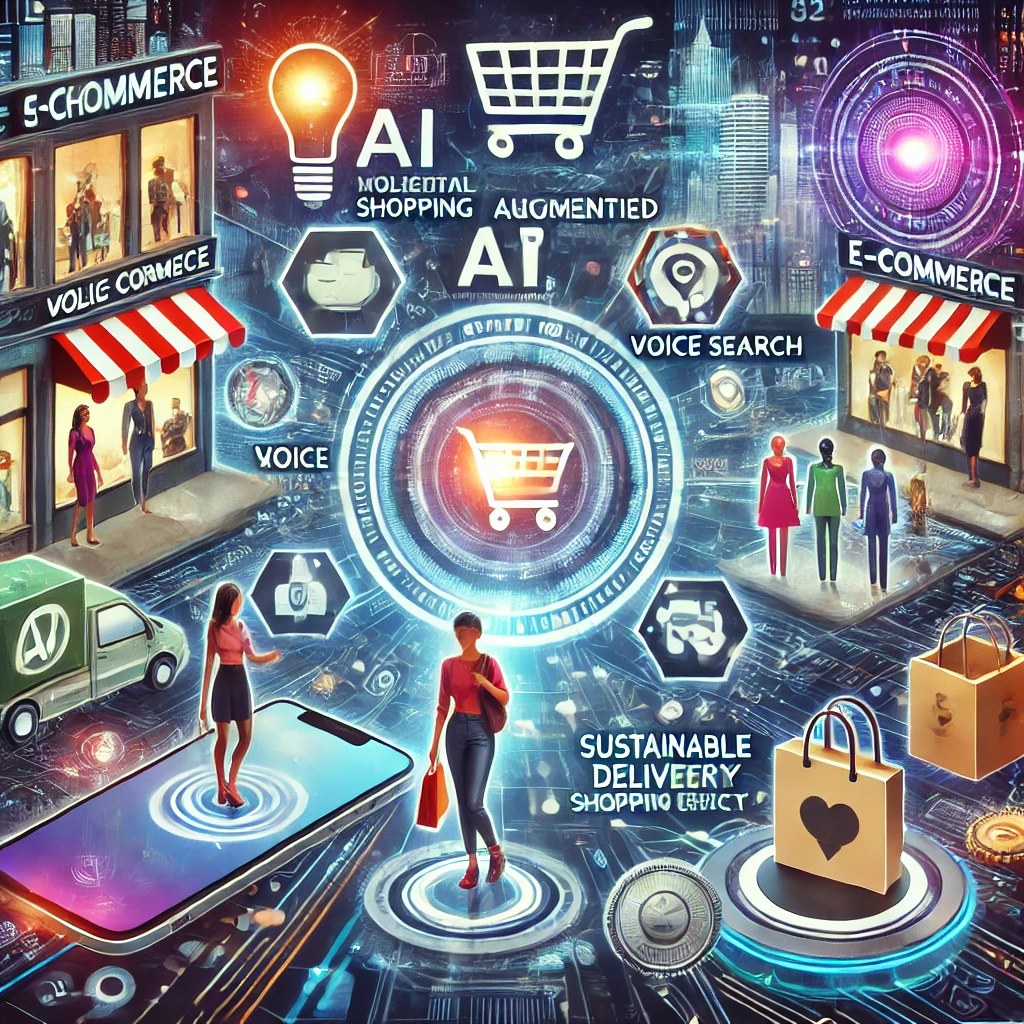
E-commerce is evolving at an unprecedented pace, driven by technological advancements, changing consumer behaviors, and innovations in digital marketing. Businesses must stay ahead of the curve to remain competitive in the online marketplace. Here are the top trends shaping the future of e-commerce in 2025 and beyond.
1. AI-Powered Personalization
Artificial Intelligence (AI) is revolutionizing e-commerce by offering highly personalized shopping experiences. AI-driven recommendation engines analyze customer behavior and preferences to suggest relevant products, increasing engagement and conversion rates.
Key Applications:
- AI chatbots for customer support
- Personalized product recommendations
- SEO-optimized – Includes relevant keywords, meta descriptions, and quality content.
- Predictive analytics for inventory management
2. Voice Commerce & Conversational Shopping
With the growing adoption of smart speakers like Amazon Alexa and Google Assistant, voice commerce is becoming a significant trend. Consumers are increasingly using voice commands to search for products and complete purchases.
How Businesses Can Adapt:
- Optimize product listings for voice search
- Develop voice-activated shopping assistants
- Implement conversational AI chatbots for seamless customer support
Example: Walmart and Amazon have integrated voice shopping into their platforms, allowing customers to add items to their carts using voice commands.
3. Augmented Reality (AR) & Virtual Reality (VR) Shopping
AR and VR are transforming online shopping by enabling customers to visualize products before purchasing. AR-powered apps allow users to try on clothes, see how furniture fits in their space, and even test beauty products virtually.
Popular Use Cases:
- Virtual try-ons for fashion and accessories
- 3D product previews for furniture and home décor
- AR-powered mobile apps for interactive shopping experiences
Example: IKEA’s AR app allows customers to visualize furniture in their homes before making a purchase.
4. Social Commerce & Influencer Marketing
Social media platforms like Instagram, TikTok, and Facebook have evolved into powerful e-commerce channels. Brands are leveraging influencer marketing and shoppable posts to drive sales directly from social media.
Best Practices:
- Utilize Instagram & TikTok Shop features
- Partner with influencers to promote products
- Engage with customers through live shopping events
Example: TikTok’s "Shop Now" feature allows users to purchase products seamlessly from the platform without leaving the app.
5. Mobile-First Shopping & Progressive Web Apps (PWAs)
With mobile commerce accounting for over 70% of e-commerce sales, businesses must optimize their platforms for mobile users. Progressive Web Apps (PWAs) offer a fast, app-like experience without requiring downloads.
Benefits of PWAs:
- Faster loading times and improved performance
- Offline browsing capabilities
- Higher engagement and conversion rates
Example: Alibaba adopted a PWA strategy, leading to a significant increase in conversions and mobile traffic.
6. Subscription-Based & DTC Models
The rise of direct-to-consumer (DTC) brands and subscription-based business models has changed how customers engage with brands. Subscription services offer convenience and personalized experiences, fostering long-term customer relationships.
Popular Categories:
- Beauty and skincare subscription boxes
- Meal kits and grocery deliveries
- Streaming and digital content subscriptions
Example: Companies like Dollar Shave Club and HelloFresh thrive on subscription-based models, ensuring recurring revenue and customer loyalty.
7. Sustainable & Ethical Shopping
Consumers are becoming more environmentally conscious and prefer brands that prioritize sustainability. Businesses are focusing on eco-friendly packaging, ethical sourcing, and carbon-neutral shipping to appeal to this growing demand.
How to Implement:
- Offer eco-friendly product lines
- Use recyclable packaging materials
- Highlight sustainability initiatives on product pages
Example: Patagonia promotes sustainability by offering recycled materials and second-hand product options.
8. Buy Now, Pay Later (BNPL) Services
Flexible payment solutions like Buy Now, Pay Later (BNPL) have gained popularity, allowing customers to purchase items in installments without interest. Platforms like Afterpay, Klarna, and PayPal’s Pay in 4 make high-ticket purchases more accessible.
Advantages for Businesses:
- Increases average order value (AOV)
- Reduces cart abandonment rates
- Attracts younger consumers who prefer flexible payment options
Example: Retailers like ASOS and Nike offer BNPL options at checkout, increasing conversion rates and customer satisfaction.
9. Faster & Same-Day Delivery
Consumers expect faster shipping, and companies are investing in logistics to meet this demand. Same-day and one-hour delivery services are becoming standard in major cities.
Strategies to Improve Logistics:
- Utilize local fulfillment centerso
- Partner with third-party logistics providers
- Implement AI-driven inventory management
Example: Amazon Prime offers same-day and two-hour delivery options in select locations, setting the industry standard for fast shipping.
10. Cryptocurrency & Blockchain in E-Commerce
Blockchain technology is enhancing transparency, security, and payment options in e-commerce. Cryptocurrencies like Bitcoin and Ethereum are being accepted by more online retailers.
Benefits of Blockchain & Crypto:
- Secure and decentralized transactions
- Reduced fraud and chargebacks
- Transparent supply chain tracking
Example: Shopify and Overstock accept cryptocurrency payments, offering customers alternative payment options.
Conclusion
The future of e-commerce is driven by AI, mobile-first experiences, social commerce, and sustainability. Businesses that embrace these trends will thrive in the competitive online marketplace. Whether through AI personalization, AR shopping, or BNPL services, staying ahead of these trends will ensure growth and customer satisfaction.